




Park & trails
Central Park
This 159-acre park between 111th and 116th Streets has more than six miles of trails, the Monon Community Center, and the Monon Greenway running through it.
Consistently ranked one of America's best places to live — Carmel blends award-winning schools, a thriving arts scene, and a quality of life that keeps demand high year-round.
Carmel ranked #1 Best Place to Live in America by Money Magazine for cities with a population between 50,000 and 300,000. In 48 square miles, Carmel packs over 125 modern roundabouts, a world-class performing arts center, a charming Arts & Design District, and one of Indiana's top-rated school systems.
The heart of Carmel is anchored by a charming Main Street with historic buildings, the world-class Carmel High School, and the recently renovated Carmel Clay Public Library. An experienced agent at Yosha Snyder Group can help you find the right home in Carmel.
This 159-acre park between 111th and 116th Streets has more than six miles of trails, the Monon Community Center, and the Monon Greenway running through it.
Galleries, boutiques, and cafés line Main Street and Range Line Road, with life-size J. Seward Johnson sculptures of everyday people scattered along the sidewalks.
Opened in 2011, this 1,600-seat concert hall modeled on an Italian Renaissance villa anchors the Allied Solutions Center for the Performing Arts and hosts the Carmel Symphony Orchestra.
Carmel is a beautiful place to live — excellent infrastructure, well-kept roadways, top-rated schools, and a quality of life Money Magazine has now named the best in Indiana multiple times. The charming Main Street area, world-famous Palladium, and Monon Trail corridor give the city a walkable core unlike most Midwest suburbs.
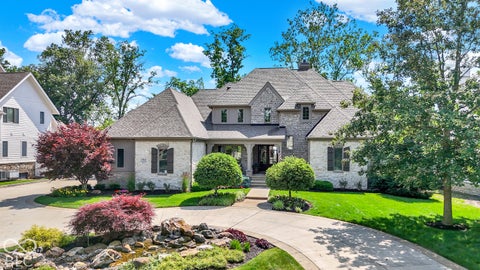
Homes in Carmel come at a premium, but not as steep as you might assume. The cost of living remains moderate compared to other Midwestern cities of comparable amenity. The zip code spans a wide range — from $300K townhomes near the Arts District to $3M custom estates in West Clay and Carmel Country Club.
Properties in this sought-after market tend to sell quickly. Buyers who are prepared to move fast — with financing lined up and a clear sense of their priorities — consistently get the best outcomes. The Yosha Snyder Group team knows every neighborhood and can tell you which streets deliver the best value.
Carmel combines top-ranked schools, a vibrant arts and dining scene, excellent infrastructure, and strong home values — all within a 25-minute drive of downtown Indianapolis. Money Magazine has repeatedly named it the best place to live in Indiana.
Most of Carmel is served by Carmel Clay Schools, consistently one of Indiana's highest-rated public districts. Carmel High School is frequently ranked among the top high schools in the state for academics, arts, and athletics.
Carmel spans 46032 (Old Town and Arts District), 46033 (eastern Carmel and Bridgewater), and 46074 (north Carmel near Westfield). Each zip has its own character and price range.
The median home price in Carmel is around $595,000, though the range is wide. Townhomes start near $300K; estate homes in West Clay and Carmel Country Club can exceed $3M.
Parts of Carmel are highly walkable — Old Town, the Arts District, and the Monon Trail corridor are designed for pedestrians and cyclists. Outside those cores, a car is needed, though the trail network is excellent.